Calm Spaces Photo Gallery
Classroom photos showing real examples of calm-down spaces with emotion charts and regulation tools.
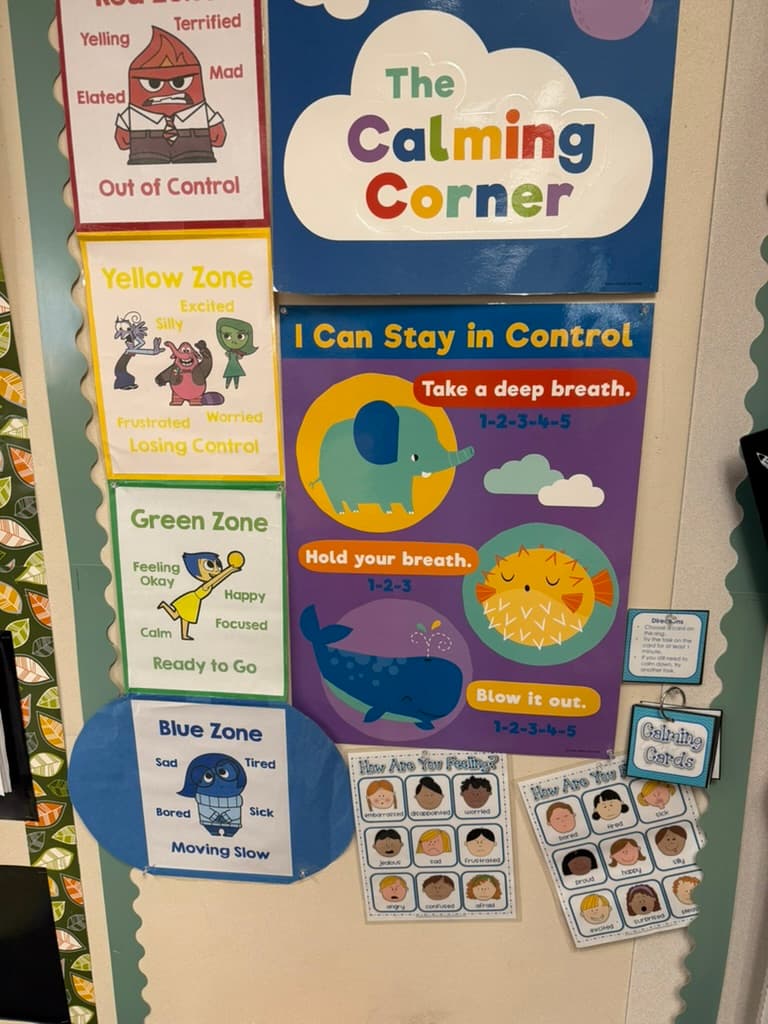
Calm Spaces in the Classroom
A calm space (also called a calm corner or cool-down area) is a designated area in the classroom where students can go to regulate their emotions. These spaces should be accessible to all students and equipped with tools that help children name their feelings and choose a strategy to manage them.
Key Components of an Effective Calm Space
- Tools to name feelings -- emotion faces, feelings charts, or mirrors
- A menu of strategies -- breathing technique visuals, counting cards, or sensory options
- Physical comfort items -- soft seating, stuffed animals, weighted lap pads, or fidgets
Tips for Implementation
- Teach it explicitly -- Introduce the calm space during a calm moment, not during a crisis. Model how to use each tool.
- Make it independent -- Students should be able to access and use the space without adult direction. Post visuals at their eye level.
- Keep it fresh -- Rotate tools periodically and check in with students about what helps most.
- Frame it positively -- The calm space is not a time-out. It is a place where students go to take care of themselves so they can return to learning ready.
Related Resources
Daily Transition Map and Reflection
A visual planning tool for mapping and reflecting on daily classroom transitions.
Executive Function Blog Post
A Novak Education blog post on empowering executive function and learner agency — Let Them Tie Their Own Shoes.
Goblin Tools Video Walkthrough
An Instagram video walkthrough explaining how to use Goblin Tools to support transitions and executive function.
Collection of Reflection Activities
A Google Drive folder with a collection of reflection activities you can use across your day.